
“Bring the story to life.”
It may be the most common instruction in entertainment experiential marketing. It is also one we should reconsider.
Great stories are already alive. They live in the imaginations of viewers, the identities of gamers, the rituals of sports fans, the communities surrounding artists and the conversations that continue long after a premiere, match, concert or product release.
The real opportunity is not to bring a story to life.
It is to give fans a meaningful role inside it—and create something that continues to generate energy after they leave.
That distinction matters because too many entertainment activations are still treated as isolated moments. Recreate a set. Enlarge a prop. Build a photo opportunity. Add a screen, some interactivity and a shareable ending.
The result may be beautifully crafted. It may draw a crowd and generate content. But a physical reproduction of a world is not necessarily the most meaningful way to experience that world.
And a moment, no matter how impressive, eventually ends.
An engine produces something.
.png)
Audience is the Most Important Evolution
After 25 years of designing and building experiences, the biggest change we have witnessed at FGPG is not a particular technology, platform or format. It is the changing role of the audience.
The audience was once primarily an attendee. Then the attendee became a participant. Today, that participant isalso a creator, distributor, critic and member of an always-on fan community.
In fact, according to Event Marketer’s Annual Event Track Study, over 80% of people say participating in a live brand experience makes them more likely to become a deeply loyal fan. They don’t just want to see the world; they want a stake in it.
Fans do not wait quietly outside the story. They analyze it, debate it, remix it, cosplay it, stream it and build relationships through it. In many cases, their connection to one another becomes as important as their connection to the original property.
Yet when entertainment becomes experiential, we still sometimes ask these active communities to do little more than walk through, look around and take a picture.
That is the gap our industry must close.
The next era of entertainment marketing will not be defined by bigger spectacle alone. It will be defined by experiences that convert fan energy into something more: participation, creation, conversation, community and deeper attachment to the franchise.
At FGPG, we have come to think of this connected system as an experience engine.
Fandom becomes participation. Participation creates personal investment. Personal investment produces stories and content. That content drives community conversation. And the conversation generates new energy around the property.
When that cycle works, the experience isno longer the final execution of a campaign. It becomes an engine powering the campaign forward.
Story Is the Fuel
Every entertainment property contains more than recognizable imagery. It has its own rules, tensions, behaviors, mythology, language and rituals.
Those elements should fuel the experience.
Imagine removing the logos, character names and familiar graphics from an activation. Could the same idea be reskinned for another film, series, game, team or artist?
If the answer is yes, the experience maybe using the IP as decoration rather than drawing from its essential DNA.
The strongest entertainment experiences are not merely themed. Their behaviors grow directly from the world.
Fans should recognize the property through what they are asked to do, not only through what they see on the walls.
The Fan Is the Ignition
Nothing moves until the fan has a role.
“Guest” is not a role. Neither is “attendee.”
Who does the fan become upon entering?What can they attempt, decide, discover, protect, create or change?
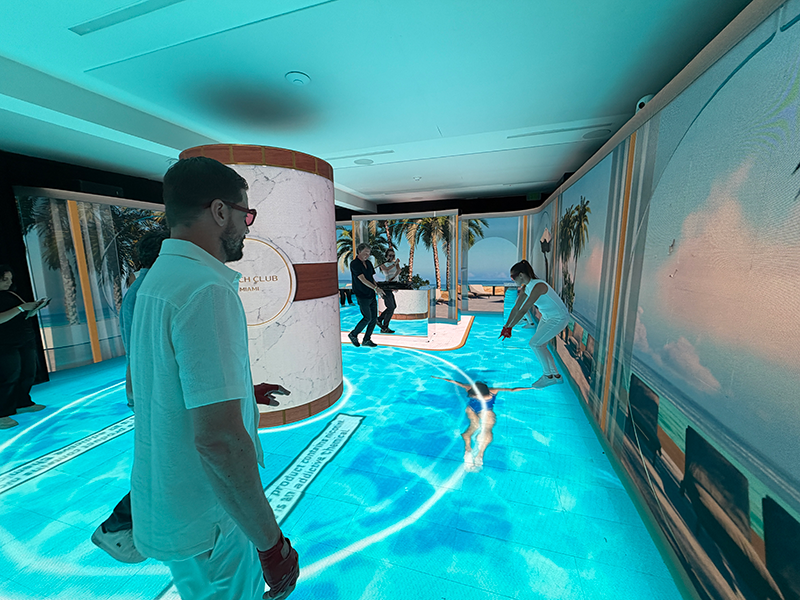
That role does not need to involve elaborate technology. A meaningful experience might ask fans to choose an allegiance, demonstrate knowledge, contribute to a collective artifact, perform a familiar ritual, unlock hidden information or collaborate toward a shared outcome.
Participation is not defined by the number of sensors in a room. It is defined by whether the fan matters inside the experience.
A screen that reacts to movement may be interactive in the technical sense. But interaction without consequence is simply a more elaborate way to press a button.
The important question is not “what can this technology do?” It is “what can the fan do now because of it?”
Participation Creates Motion
A photo opportunity can be valuable, but it should not automatically be mistaken for participation.
The strongest experiences give fans something worth carrying forward: a decision, achievement, relationship, artifact, story or new piece of the world.
That is what creates personal investment.
When someone has affected an outcome, revealed something about themselves or contributed to a shared experience, theyare no longer documenting a marketing execution. They are telling the story of something they did.
That difference matters because fans do not share experiences simply because marketers make them shareable. They share what gives them emotional or social value: access, discovery, humor, beauty, mastery, identity, surprise or proof that they belonged.
The instinct to share is nearly universal—Event Marketer research shows that 98% of attendees create content atlive events, and 100% of them share it. Furthermore, Forrester data revealsthat this fan-generated content is viewed as 2.4 times more authentic than anything a brand produces itself.
The content is strongest when it is evidence of a genuine experience, not the experience’s only purpose.
Community Creates Momentum
An experience should never be planned solely around what happens between opening and teardown.
It begins with anticipation: invitations, announcements, speculation, creator conversation and community discovery. It continues through the physical encounter. Then it should produce an afterlife.
That afterlife might include fan-created content, unlocked material, new relationships, community status, continuing challenges or a compelling next step into the franchise.
A recap video proves that an event happened. It’s the baseline default.
An experience engine gives what's happening in the moment – and what happened – a continuing consequence.
This requires designing for at least two audiences at once: the fan in the room and the much larger fandom experiencing the moment through other people.
The business case for this dual approach is undeniable. According to Adweek, 86% of consumers find physical experiences more impactful when they have a continuing digital counterpart. Furthermore, CMO Council data proves that integrating live events with digital community amplification drives significantly higher ROI than isolated physical activations.
The fan who shows up deserves something worth the effort of being there. The wider community deserves more than a stream of branded backdrops. It needs stories, discoveries and human reactions that create a sense of participation beyond the physical footprint.
Measure What the Experience Sets in Motion
This model should also change how we define success.
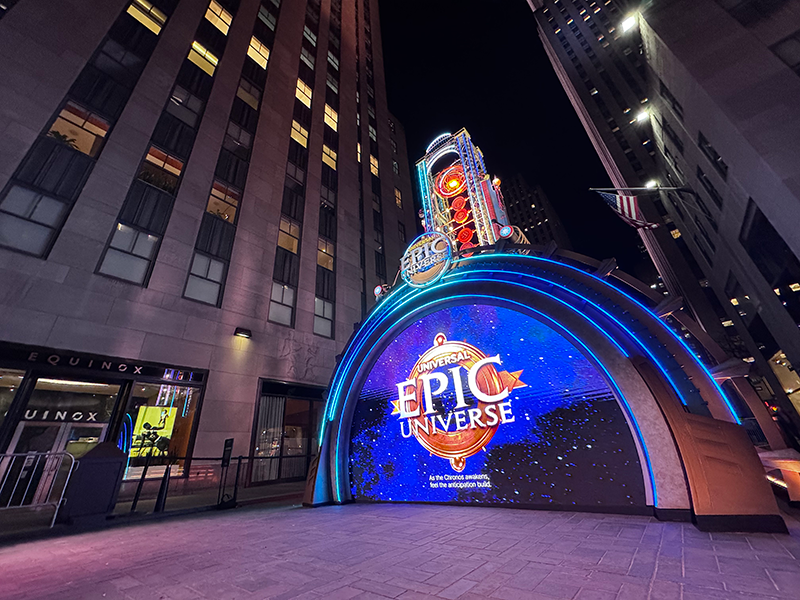
Attendance and impressions tell us howf ar an experience traveled. They do not tell us how deeply it entered the fandom.
We should also ask:
Did fans choose to participate? How long did they stay? What did they create? What did they say without being prompted? Did the experience generate conversation inside the community? Did it move people toward another episode, game, event, subscription, purchase or relationship?
Reach matters. But depth is what turns an encounter into attachment.
This shift in measurement is already happening at the highest levels. According to research from the CMO Council and Forrester, more than 60% of chief marketing officers now view experiential as the single most effective channel for driving action and accelerating the customer journey, but only when they track deep engagement and behavioral shifts rather than just basic headcount.
Before approving the next entertainment activation, marketers should apply three tests:
The Role Test: Does the fan have a meaningful role, or are they walking through someone else’s idea?
The World Test: Could the same experience work for another property if the graphics were changed?
The Ripple Test: What continues after the fan leaves?
If the answers are unclear, the experience may capture attention without creating momentum. This is where theright agency partner can help ensure every ingredient is considered beforehand to drive maximum ROE (return on experience).
Build for What Happens Next
Over the past 25 years, our industry has moved from static displays to immersive environments, from isolated events to connected campaigns, and from simple interaction to increasingly responsive experiences.
But the most important evolution is not what we can build.
It is what the experience can set in motion.
That requires entertainment marketers and their agency partners to begin with fan behavior rather than footprint. To define the audience’s role before designing the environment. To plan experiential, social, creator and content strategies as one connected system. And to use technology only when it makes participation more human, personal or consequential.
A moment captures attention.
An engine converts that attention into energy.
The future of entertainment marketing belongs to experiences that give fans a meaningful role, give communities something worth carrying forward and continue producing value long after the physical structure comes down.
Stop building moments.
Start building engines.