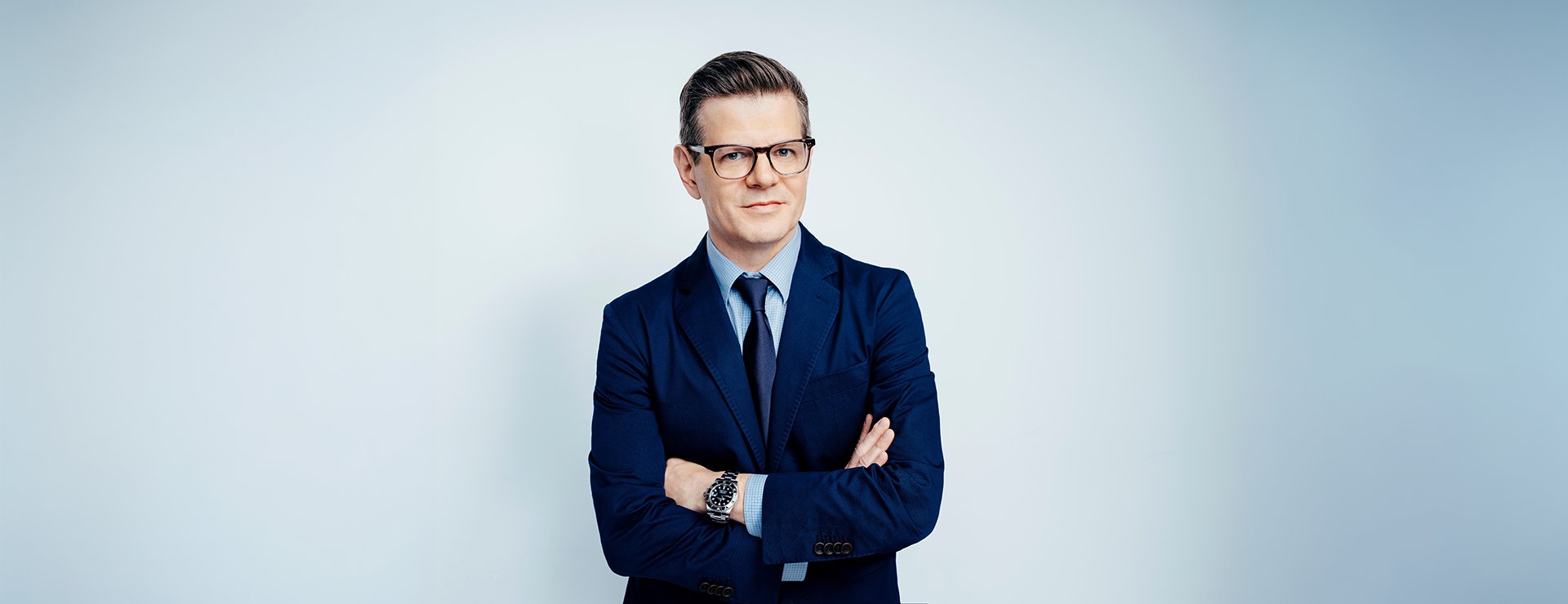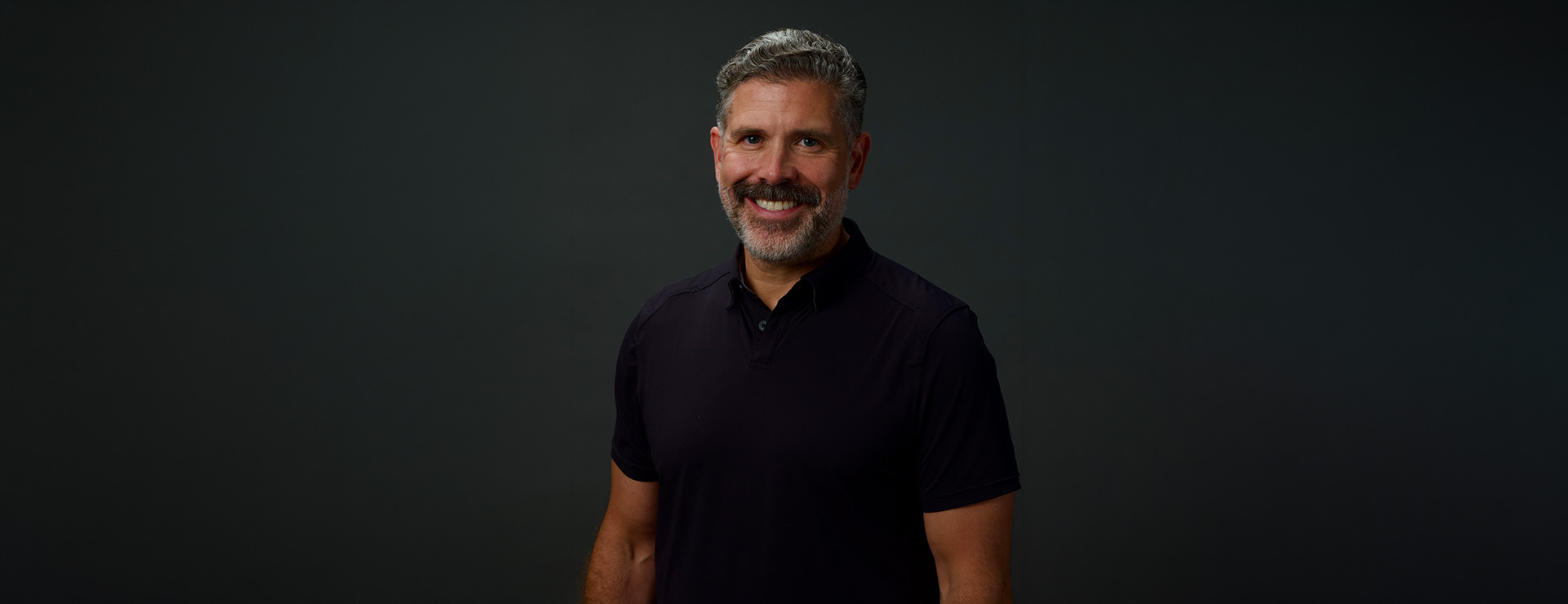
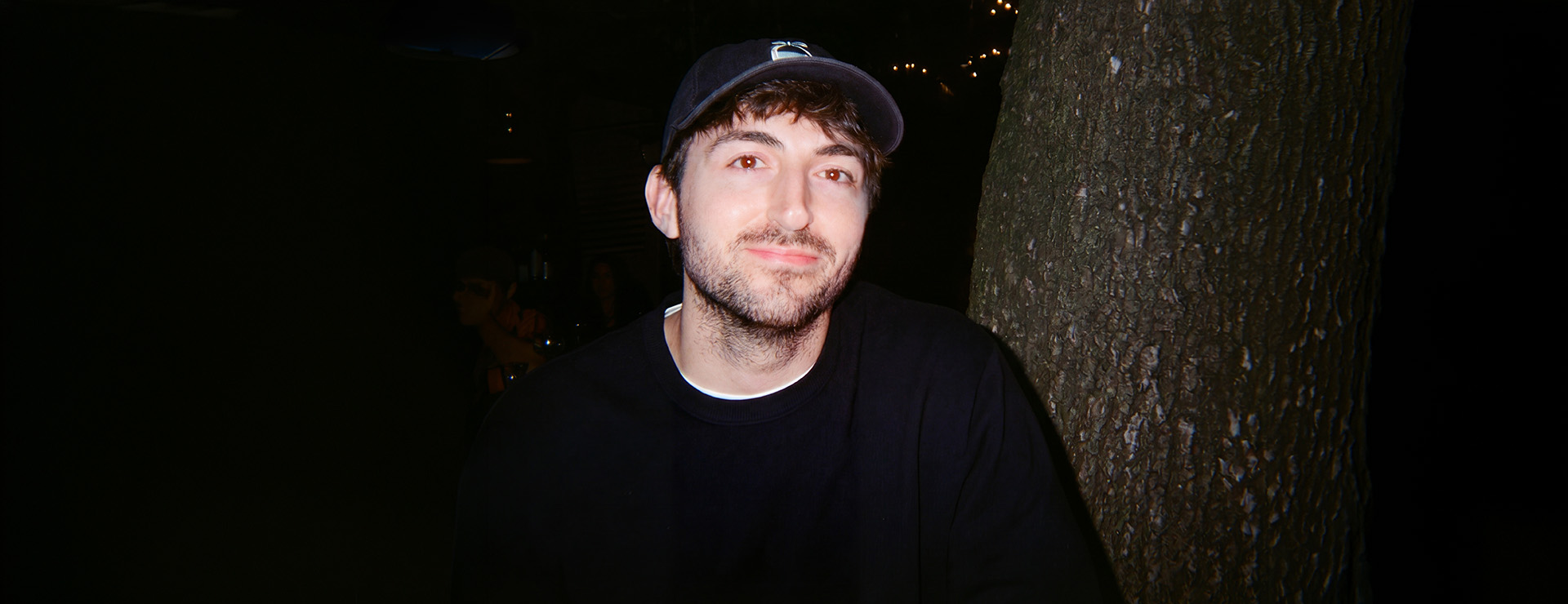
Logging on to a Zoom call to interview Aidan Tanner, his background is of an old Blockbuster video store. When he was a young teenager, the 29-year-old says, his local Blockbuster closed and he rode his bike back and forth to the store, loading up with on-sale DVDs and carting them home.
It’s the perfect backdrop for Tanner, an old-school cinephile who has converted his love for film into capturing of-the-moment social videos for the likes of Will Smith, Jessica Chastain, Tom Cruise, Lupita N’yongo and more.
Spotlight caught up with Tanner (and felt very old after doing so) to learn how sending one simple email to Will Smith’s content team turned into creating social videos for some of the world’s biggest celebrities and movies – including this summer’s Christopher Nolan blockbuster, The Odyssey.
Spotlight: How did you get into doing this level of production at such a young age and how did you gain the confidence to send a cold email to the likes of such a global superstar as Will Smith?
Aidan Tanner: I grew up at the start of the YouTube university era, so I watched a lot of YouTube tutorials. It started with visual effects and then I went on to shooting short films with the webcam using Windows Movie Maker and stuff like that.
I was lucky, I went to one of the two arts high schools in Toronto that had film classes, so that's when I finally got the chance to make something, show it to classmates, and actually get some feedback. It was good to get that feedback and to realize ‘oh, maybe I'm actually not terrible at this.’
That kept me putting stuff out on the internet, on YouTube. I ended up going to Ryerson University Film School for about a year and a half until I dropped out. We shot on film the first year, and it was really great to learn how to shoot on film, but then I was also working on sets outside of school, and I was learning a lot more there. I decided to take a leap of faith and a leap of absence.
It was during that year, which was like the end of 2017, that Will Smith started getting on social media and posting YouTube and Instagram videos. It was very different from what other A-list talent was doing at the time. It was very raw and real. Nobody had seen a celebrity in that way, it was just him and his personal trainer making these videos. Instinctually, I was like ‘if he's taking this seriously, maybe he's thinking about putting together a team.’ That's when I did some internet hunting and found the email addresses of some people on his team, and sent cold emails out. It was just like, 'Hey, I love what you guys are doing with Will's Instagram and YouTube. If you ever need a shooter/editor, let me know.’
They got back to me like six months later and invited me to go to Budapest to shoot with him for two weeks. I did my best social media content, which was new for me, because I had been doing more traditional music video and commercial stuff. They liked what I did, and they kept bringing me out, and that's what started it all.
Spotlight: I remember so clearly the ‘In Your Feelings’ challenge of 2017, which seems like four days ago, and I remember watching that video of Will Smith on the bridge in Budapest.
Tanner: Yeah, that was crazy. That was like our last day in Budapest, and so we just decided to do it on a whim. It was late the night before that we decided to wake up and do that super early before we were leaving.
Spotlight: I think that shows that even though people always ask ‘how do you make this video go viral,’ you just really never know.
Tanner: I think about this a lot. You have to be somewhat calculated, but there's also a level of, it's not that deep, you can't be super attached to it, you have to let whatever happens happens. That's what makes it feel authentic too, especially on social media. It’s always about finding that balance, not planning too much, not taking it overly seriously, and trying to have fun.
Spotlight: What led you to producing content from Will Smith to productions like Mission: Impossible, Stranger Things and so on?
Tanner: When I started working with Will, they kept bringing me out, and I became perma-lance with him, traveling and shooting on the road with him. I did that for about three years, and then the pandemic happened, and all travel stopped. He was still very busy, and his company was growing a lot during the pandemic. He was doing these Zoom shows, when it was the era of the Zoom talk shows.
They were putting me to work in Toronto from my laptop, but there was only so much I could do from my laptop, so they finally helped me get a visa to come and move to LA. That's when I joined his company full-time for another like two or three years.
Through his company, Westbrook, I also started working with other talent. I started working a lot with Jessica Chastain. That ended up being a really great mentorship and relationship. She's been really supportive about my aspiration of making films. We made a short film together called The Sands Between right before the pandemic.
I remained full-time at Westbrook for a couple years, and then Paramount reached out to me about Mission: Impossible. They found me mainly through the content I had made with Jessica, more so than the content I had made with Will. They had Dead Reckoning, Part One coming out, and they were looking for someone to go on the press tour and help create content. It was this moment where I had to make a decision to leave and start my own thing. I decided it was time to start working with other people and build something of my own.
So I joined the tour with Tom, and we found his lane on social. We did a bunch of cool stuff with him. At the end of the tour, we flew to four cities in one day on the movie’s opening day to surprise theaters. He's the first one to show up at the premieres and he spends so much time with the fans. It was really cool seeing his perspective and capturing that.
There were a lot of great moments backstage as well where he opened up to my camera quite a bit. That’s the stuff that I’m trying to always capture – those moments that audiences don’t see that are human moments, unplanned stuff that I think travels really well online and creates good buzz.
Spotlight: What do you think it is about you or your methods that allows you to fully understand this space and how celebrities should be in this space?
Tanner: At my company, Propellerhead, we operate like the liaison between the studio and the talent. We're filmmakers first in hat we approach the marketing of the film and the content that we're creating as a craft in itself. I think the talent really responds to that. Also having someone to work with that they trust that represents the studio, but is disconnected in a way, and is also creative in their own right, I think that creates a lot of trust from talent. That’s when we end up getting the best stuff.
I work really closely with Lupita Nyong'o as well. I met her through working on The 355 with Jessica Chastain, and then Paramount brought me on for A Quiet Place: Day One, and we reconnected. That’s a really good relationship – it’s almost the ideal relationship – where talent recommends us to the studio. It’s a win for everyone because the talent gets the content they like and want and the studio gets lots of access to the talent through us.
Spotlight: One thing I wanted to ask you, and especially because you're talking about being a filmmaker, and I think this is very of the moment, but you're seeing so much press around Backrooms and Obsession, both of which come from YouTube creators. What is your reaction to that, and why do you think those films are having the reception they are?
Tanner: I'm very excited by what's happening. From a social media perspective, I think it's interesting to see the extension of the film happen online, both before the film is even made.The IP for Backrooms had already been brewing in the culture, this whole idea of liminal spaces, it’s like this deep internet thing. As a result of that, the marketing of the film felt very cohesive with the actual film.
It’s also been interesting to see the internet usher in Kane Parsons and fully back him and to see Curry Barker’s rise. YouTube is the new testing ground. That is the new place and way to get your work seen. It used to be that you would make a short film and do a festival run, but now you can do that on YouTube and online.
Mystery Guitar Man, aka Joe Penna, is another big YouTuber who has done a number of features. He told this story about how he finally got his first feature, Arctic. Prior to that, he had made a number of short films and put them on YouTube. They were finally on set actually making the film, and the producers were like ‘so what's this YouTube thing you do?’ And he was like ‘what are you talking about? I thought the reason you greenlit this film was because of my YouTube and this built-in audience that I have.’ And they said ‘no, we just saw a short film at a festival that you did, and it was great.’ At that time, the internet was so disconnected from the film world. I think they're finally really merging and becoming one thing.
Spotlight: Going back to Mission: Impossible, Cruise obviously understood the importance of being on social and the importance of being global, and tying those two things together. But I feel the way Hollywood is reacting to the success of Obsession and Backrooms is of total shock. It makes me wonder, ‘have you guys not been looking at the internet for the past five years?’ How do you feel like this changes the way Hollywood thinks about developing movies and marketing movies?
Tanner: My hope would be that Hollywood starts to take more smaller bets instead of fewer bigger bets on creators that have a specific voice and maybe a built-in audience, but I don't even think the built-in audience is necessary. I think if it's a strong idea, like I think the Backrooms IP is, [it’s worth looking into].
Spotlight: You’re seeing the traditional theatrical and content business getting ever larger, but you're also seeing this incredible democratization of content on places like YouTube. There's a lot of strum und drang among these big media businesses about the viability of the theatrical business, but then you see people like what you guys are doing on YouTube, and it's two totally conflicting cultures, so it will be interesting to see how it plays out.
Tanner: I'm really interested in the micro drama space, specifically. That really feels a lot closer to home, in terms of what I've been doing for the past couple of years. I've been thinking a lot about how there's going to be a breakout show soon. When that happens there could be a pipeline there as well.
That’s what happened with Backrooms, with these almost proof-of-concept shorts online that Kane Parsons made, but I think there's this going to be this pipeline where you can create a fan base, create an IP with a micro drama, and then maybe release the finale, like they did with Stranger Things in theaters. It will have that built-in engine.
Spotlight: Speaking of Stranger Things, let’s talk about the work you did for that show.
Tanner: Stranger Things was a lot of on-set content. Netflix wanted to drive a lot more traffic to the previous seasons before the fifth season came out, so we put together a bunch of creative to try and stir up that nostalgia for the previous seasons. We did a rewatch campaign in which I would walk up to talent with a prop from one of the previous seasons, and I would ask them, ‘do you remember this?’ And they would tell the story of when they shot the scene with that prop. That content played into the nostalgia of the show, got people excited to rewatch the previous seasons and then be excited for the final season. It was all very intimate iPhone shot-on-set type of content.
Spotlight: How did that work in terms of you being there on set and doing content for the show, but also the talent having their own social platforms?
Tanner: It's funny, some of the younger talent are very on social. They don't like to shoot social marketing campaign content, it makes them feel like a sell-out or something. They want to do their own thing, they don't want it to feel forced, ever. But what I want to do ultimately with everyone we work with is trying to meet them at that place that they're in. I don't think the talent wants to feel overexposed either so it's just picking these authentic moments to put out. It's shooting a lot, to be honest, and then figuring out how to position things in post and how to put things out while not doing too much.
Spotlight: Over the course of the time you've been doing this, what are some of your favorite viral moments – are we still using the word viral? – from all of the stuff that you've done?
Tanner: There are one or two moments with Tom [Cruise] that were really great, and they both involved popcorn on the first tour. On the first tour, I got one clip while we were in the green room waiting to surprise the audience in the theater, and he just said ‘movies, popcorn,’ while he had this big popcorn bucket in his hand. It was just the vibe with the way he was sitting.
I caught it in the moment, and the internet went wild with it. People made shirts with that moment on it.
There was also another moment where, and this just happened to be captured because I was shooting right with him, Tom was going out to intro one of the screenings that we were doing, and there was this kid in the front row that, before the movie had even started, had finished his bucket of popcorn. Tom, as he was going up the stairs, noticed that his popcorn bucket was empty, and he said ‘You finished all your popcorn, you gotta go get some more.’ I panned to that kid, and he looked so embarrassed that he had finished all his popcorn before the movie had even started. It was just a small moment in this bigger edit, but then the internet took that clip and it went crazy on X.
Spotlight: You're talking about doing this very authentic content, but you're also working for a studio or talent or both, and they have very definite views of how they want things to be seen and consumed. If you are trying to put authentic content out in the world, and specifically on places like TikTok that really rewards that, how do you navigate that with your studio and talent partners?
Tanner: This is a tricky thing with the studios, because the studios always want an end card, they want some sort of call to action in the video, some sort of mention of the film, and I'm of the mind that any piece of content with the talent during the lead-up and the promo for the film that goes viral in any way, even if it doesn't mention the movie, raises the relevance level of the talent, and then will ultimately raise the relevance level of the movie as well.
Spotlight: And if it's too marketing-y, people will bail from it.
Tanner: Exactly. That's why more and more we're shooting on iPhone, because it's more native to the platforms. If it's shot cinematically or nicely, people scroll away right away, because it feels like an ad.
There's a great example of when I was working on Gladiator II. We were in Sydney for the press tour, and I had the afternoon to plan something to shoot with [the movie’s star] Paul Mescal. I pitched going to the botanical gardens, which was near our hotel. I suggested shooting a bird-watching video. There was nothing to do with the movie at all. Paramount was like ‘are you sure, what does this have to do with the film? How can we fit in the film?’
I had a good relationship with Paul, and I knew what he was down to do. He just wanted to see where we were, and go explore. So we went and shot it, and it ended up going viral. It was just this really simple video of him with the throughline of ‘can we find this masked lapwing?’ It went super viral, and raised the relevance level of the film, and him as well in that moment.
Spotlight: When that happens, do you feel like that adds to your credibility with your clients?
Tanner: At that point I had a good relationship with the digital team at Paramount, so they did trust me, but it's definitely a leap of faith. Every hour on those tours is accounted for, especially with talent. Obviously, I feel great after it works, but sometimes it doesn’t work. I'm definitely of the mind of let's capture as much as we can, so we have options. I think it's a numbers game as well.
Spotlight: What are you working on right now that you are excited to talk about?
Tanner: We just finished shooting this series with Kevin McCarthy for The Odyssey in which we went around to a bunch of local theaters around the U.S. that will be playing the film in 70 millimeter film and speaking to the projectionists and the theater owners and highlighting them. We also went to the Kodak factory, where they actually make the film that they shot with.
This month is also a lot of Supergirl, and we're working on some stuff with Paramount for Jackass as well.
It’s really cool to be able to context switch and create in these different arenas. Chris Nolan and The Odyssey are obviously focused on the craft of filmmaking. And then Jackass is like brain-rot internet-y. We have a lot of fun with that because that's the brand.
Going back to the idea of the content being an extension of the film, it should feel the same. The energy of the content should feel the same as the theatrical experience of seeing the film.
We also have this series called “Advice to Young Filmmakers,” where we highlight directors and actors. For now, the series is asking them what advice they would give to young filmmakers who are about to make their first feature film. We've done James Cameron, Jim Carrey, Tom Cruise and Ridley Scott. We always intercut their work over their advice, so it feels like a mini retrospective. Someone sent me a DM, and said ‘you're filling in where DVD extras left off.’
Spotlight: And that takes us back to the beginning of your story, where you were biking home with basketfuls of DVDs from the Blockbuster going-out-of-business sale.
Tanner: That's a cool way to see it. We hope all our love for film comes out in those pieces.