
In the fast-paced world of modern marketing, "community" has become the ultimate buzzword. Every brand claims to be building one, yet there remains a chasm between simply having an audience and cultivating a movement.
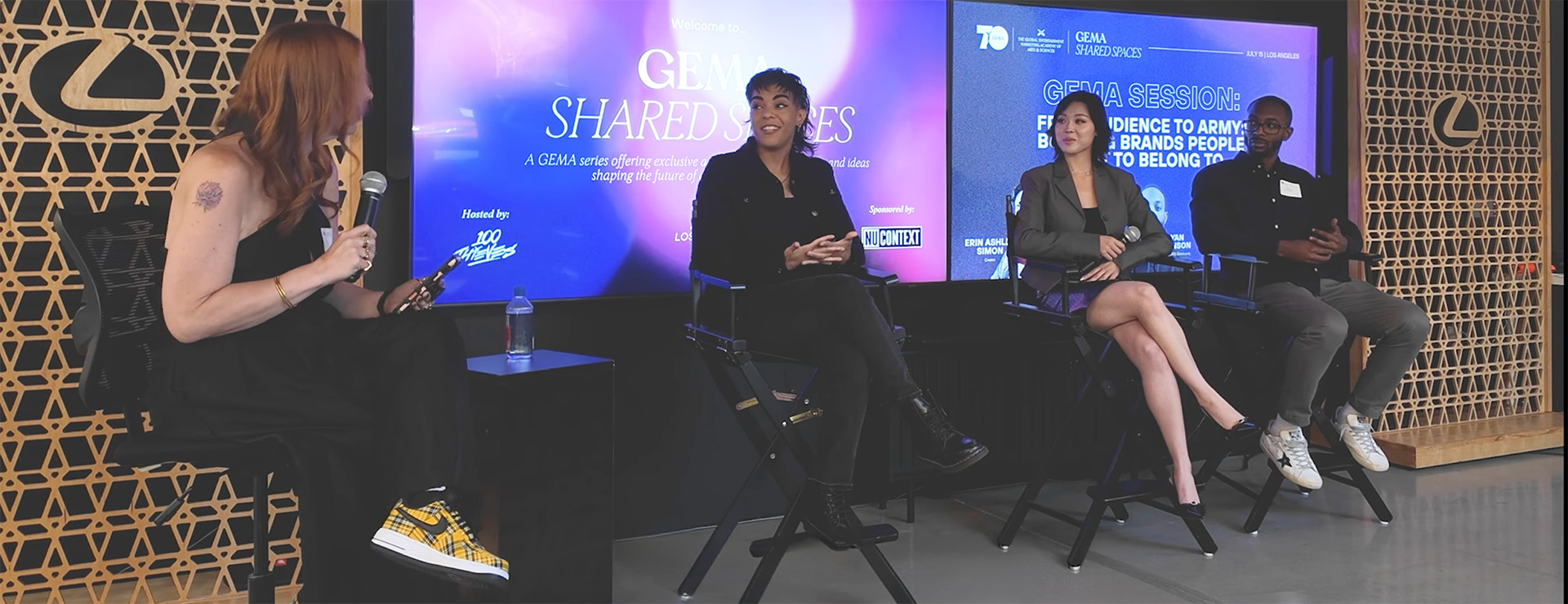
A panel of creators took on this topic at GEMA’s Shared Spaces event on Wednesday, July 15, hosted by lifestyle brand and gaming organization 100 Thieves in Culver City, Calif. There, industry leaders gathered to decode how brands can move from serving a passive audience to creating a loyal "army" of fans by developing spaces where people truly feel they belong.
Moderated by Bryanna Goecke, chief commercial officer at 100 Thieves, the discussion featured Ryan Johnson, founder of cultural intelligence platform Cxmmunity; creator and brand strategist Erin Ashley Simon, and creator, host and singer-songwriter Emily Mei. Together, the panelists shared a blueprint for relationship-building rooted in the online world of gaming and creator culture.
Shared Values vs. Eyeballs
The panel began by tackling the fundamental question: What separates a community from an audience? For Johnson, the answer lies in infrastructure and representation. By founding the nation’s first esports league for historically black colleges and universities (HBCUs), Johnson filled a void for a historically overlooked demographic.
"It all boils down to a story, experiences, and values," Johnson said, emphasizing that community is born when brands solve a problem or fill a space for a group of people who previously felt alienated.
Simon expanded on this, defining audience as mere "eyeballs," while community is built on "unifying belief systems and identities." She challenged marketers to look beyond the product. "People aren't buying your products because of the product," she said. "They're buying it because it explains who they are and their identity."
The "Disappearance Test" and Active Participation
Mei offered a simple test for any brand: “If you were to disappear, would your audience still hang out with each other, or would they disappear also? Because an audience is there to see you, but a community is there because of a shared belief. So if you disappear today and none of your fans want to talk to each other, none of your fans want to hang out, they're just there because they want to see you, but they don't feel like there's community,” she said.
To bridge that gap, Mei suggested two practical strategies: naming and tasking. Whether it’s a K-pop fandom name or a task that requires skin in the game—like fan-organized events or live activations—giving people a role makes them active participants.
"When you spend your money or your time on something," Mei said, "you genuinely feel more connected and involved."
Why Gaming Leads the Way
The gaming community understood these principles long before traditional entertainment because gaming is inherently participatory.
"Gaming wins when it comes to community because it wasn't afraid to invest in grassroots and long-term growth," said Johnson. Unlike traditional media, where viewers passively consume a movie or show, a game doesn't function without the user's active input.
This participation fosters deep trust. Simon pointed out that gaming creators often build their following from zero, creating "parasocial or interpersonal relationships" that mainstream media outlets can’t replicate. This trust is what makes creators "translators of culture" for brands—if the partnership is authentic.
Stop Selling, Start Integrating
A recurring theme throughout the discussion was the mistake brands make when trying to force their way into a community. "Don't try and force a creator to speak differently," Simon said. "Work with them as a partnership, not as a salesperson."
Goecke said the most successful brand partnerships at 100 Thieves often involve the brand giving something back—funding a fan event, supporting a smaller creator’s business goals, or creating a unique experience. Authentic community building requires a brand to have a "north star" and to be willing to stand for something, rather than attempting to remain neutral and unoffensive to everyone.
The Future is Niche, Intentional, and IRL
Looking ahead, the panel agreed that the strongest brands will be those that aren't afraid to "go small" to go deep. Simon predicts a shift away from "chasing viral trends" toward intentional, niche connectivity. The future of community isn't just digital—it's about using digital platforms to facilitate face-to-face, real-life connections.
As the lines between sports, music, gaming, and fashion continue to blur, the takeaway for media professionals is clear: Listen to the audience, hire fans to be part of your team, and prioritize trust over reach.
In Simon’s words: "Data is just a guiding metric... you really need to go in person to see this community and do everything with intentionality."