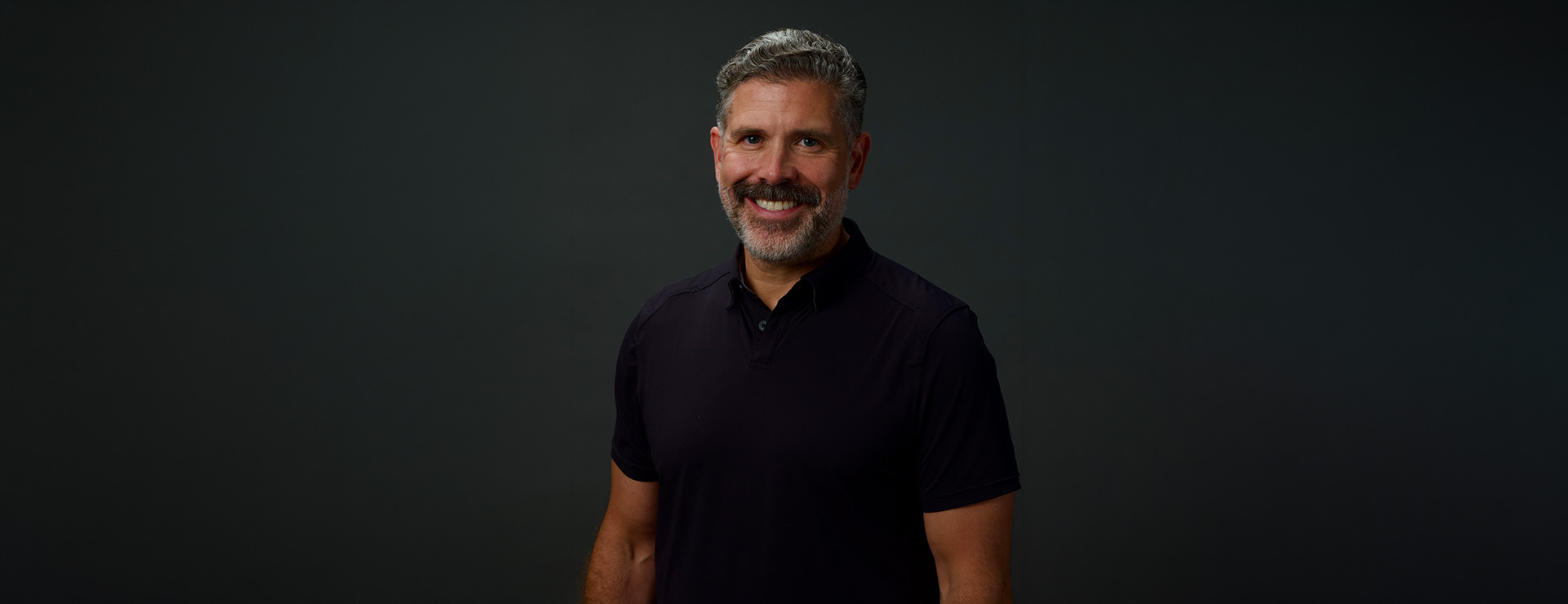


Michael Engleman has shepherded the marketing visions of several of the country’s largest media organizations: he led marketing and creative at NBCUniversal’s SyFy for almost eight years, and then jumped to Warner Bros., where he oversaw marketing for TBS and TNT. The former GEMA board member served as CMO of Showtime and then of Paramount Plus in the U.S. for nearly five and a half years.
Over those two decades in media marketing, Engleman learned how to build audiences and brands both large and small. Now he’s sharing that knowledge and experience with clients at his own shop, Sightline Advisory, where he’s working with such new media outfits as aTwist and BZZR. Unlike many executives, Engleman embraces and seeks out change – an essential quality to have in this time of unrelenting transformation.
Engleman caught up with Spotlight, sharing insights on both his own work and the entertainment industry writ large.
Spotlight: You left Paramount and Showtime in 2024, took a bit of time off, and then started your strategic advisory firm, Sightline, a year ago. You described Sightline on LinkedIn as a place ‘where fundamental media wisdom meets new world innovation.’ How are you finding that Sightline is living at that intersection?
Michael Engleman, founder, chief business and marketing advisor, Sightline: I stood up Sightline because I was interested in working with companies of any and all scale going through moments of change.
Spotlight: Aren't we all right now, though?
Engleman: It’s true, we are in a state of rapid metamorphosis, and that was the notion behind Sightline. I've had the great fortune to work across a lot of different media types in sports and entertainment. I started in ad-supported linear television and spent the last decade in D2C streaming. I’ve seen a lot of consumption changes, a lot of behavioral changes. What I've loved, in addition to leading teams of people, is these moments of transformation.
Spotlight: That’s interesting that you like living in this moment of transformation because not everybody does.
Engleman: I've always thrived on change. Whether you go back to the days when I ran marketing for Syfy (before it spelled its name with y's) and transformed that brand from a niche, U.S.-centric cable brand into a much broader global business, or to the late-stage transformations of TBS and TNT at Turner, or moving Showtime out of cable and into streaming, or the early-stage growth of Paramount+, change and transformation have always been part of my career.
Sightline exists to help facilitate that change. It's partly a platform for companies to work with me personally, and then I scale and adjust depending on the business solution required.
The lovely thing about working with companies at earlier stages is that there's a deep connection between the core business concept and how you monetize it. You really have to live by the question: "Do I have an idea that solves a problem for consumers, and can I scale that idea into a billion-dollar company?"
That's a fascinating challenge, and not something you necessarily get access to when your career exists solely within the framework of an established multinational company.
Spotlight: How are you finding clients?
Engleman: I have a couple of clients today who, like me, were forged in corporate America but emerged with an entrepreneurial spirit. Suddenly, with the freedom to invent and imagine, and especially with all the rapid changes in technology, we have the tools and runway to actually build businesses. I'm very much enjoying that.
On the corporate side, my larger clients often need an outsider's eye — someone to offer a fresh perspective on conventional ways of doing things. It's very hard to effect change in an organization when there's a long history of doing things a particular way.
So, I'm either working with founders who have big entrepreneurial visions and value my media, technology, and business-building experience, or I'm working with larger companies that need to change the alchemy of something happening within their organizations.
I like both, but I'm increasingly enjoying building.
Spotlight: Going back a bit, what do you consider to be fundamental media wisdom, and do you think that point of view survives in this brave new world of transformation. Are there certain things about media that must continue in order for media to continue, or is it all on the table?
Engleman: I think wisdom matters in all categories of business. There are fundamental truths that were important in media decades ago that are still important today. Sometimes there's a concern that wisdom can lead to calcification, but if you find the right balance between experience and a willingness to learn new lessons, that's an incredibly valuable fusion.
aTwist is a good example. It's a microdrama company started by Jana Winograde, Susan Rovner, and Lloyd Braun. Microdramas fuse swipe-able mobile video with narrative storytelling.
They're vertical, distributed through mobile apps, and represent a different way of telling stories. Growth requires a state-of-the-art, highly precise go-to-market approach. The winners in this space are digital savants. But old truths apply, too. Talent matters. Brand matters. And most importantly, engaging audiences with quality storytelling matters. If we can combine those foundational truths with bleeding-edge audience growth strategies, we can soar.
Spotlight: When did aTwist launch its app?
Engleman: They launched in early September in the U.S. and other English-speaking markets, with a broader global rollout planned for later this year. We also beta-tested in Canada for several weeks ahead of the U.S. launch.
The content is traditionally produced and shot in live action, with the exception of the anime. We use AI within the product to enable discovery and personalization, and we use a lot of AI tools in marketing to prospect for and convert customers. But the series themselves are not AI-generated.
Spotlight: I think at this point with AI, if you're not using it to do those types of tasks, then you're missing out and falling behind.
Engleman: I think in terms of the actual storytelling and the content portfolio, there is certainly an opportunity to use AI to accelerate or elevate a visual effects scene. It becomes a tool for storytelling. But aTwist believes in human writers, directors, and talent, and that has been a really important part of the mission.
We are absolutely embracing AI as part of our ability to create the best product we can and reach the largest audience we can. It accelerates our ability to create a compelling user experience, but it's not central to how we actually tell the stories.
Spotlight: I think people really get stuck on the idea that generative AI is going to take over television production and filmmaking but I’m not sure that’s how anybody wants their stories to be created. But there are a lot of other things that AI can do that gives people more time to spend on that production.
Engleman: Part of the power of aTwist is, going back to the idea of universal truths, that you still need to make an emotional connection with the audience, whether it's through romance, fantasy, horror, comedy, or anime. All of it.
The founders have a deep understanding of how to connect with audiences on an emotional level and create stories that are broadly accessible, escapist, fun, and entertaining. All of that requires a human touch.
Spotlight: You've said you have done a lot of learning, but a lot more unlearning as you started Sightline. I wondered if there's anything that comes to mind that you've both learned and unlearned over the past year.
Engleman: One of the most valuable things I've learned through building Sightline has also required me to unlearn some of my assumptions about how we build audiences.
I've spent much of my career working at enormous scale, and I remain a big believer in the power of reach, national advertising, and the way all the elements of a sophisticated marketing campaign work together.
But working more directly in digital media ecosystems has given me a new appreciation for just how precisely we can build and engage audiences. We now have the ability to operate at extraordinary scale while also creating deeply personalized, almost one-to-one relationships with consumers.
Every once in a while, I think back on the enormous sums we spent on national media and marvel at what's possible today. It's not that I've stopped believing in the power of mass marketing. It's that I've developed a much deeper appreciation for the power of precision, personalization, and building direct relationships with audiences.
And that's been one of the most nourishing parts of having my own advisory practice: getting to challenge some of the assumptions I developed over decades, without losing the value of that experience.
Spotlight: Obviously, the world of mainstream entertainment is consolidating. How do you think that’s impacting the way entertainment marketers do their jobs?
Engleman: Regardless of how many big media companies emerge from this period of consolidation, the fundamental challenge for entertainment marketers remains the same: we're competing for people's time and attention.
Whether you're marketing a streaming service, a microseries, or a FAST channel, your competition extends well beyond the boundaries of your category. That's something I increasingly emphasize with my clients. You need to understand your direct competitors, of course, but you also need to understand the entire universe of alternatives competing for your audience's time.
Because ultimately, building a hit, breaking through culturally, and achieving real scale requires more than winning within your category. It requires winning against all the other ways people could choose to spend their time.
Spotlight: In a world of consolidation and fragmentation, where do you go for reach? Are there enough places to go for reach?
Engleman: The answer is that you still go to many of the traditional places where audiences gather at scale. It's one of the reasons live sports remain so incredibly powerful. They're among the few remaining sources of truly mass, shared cultural experiences.
One of my clients, BZZR, is built around a compelling thesis: that you can bring together the fragmented world of sports content, conversation, and fandom into a single social experience. Part of what makes that opportunity so interesting is its connection to live sports, which continues to generate these enormous moments of collective attention.
There are still places in entertainment where that happens, too — platforms and environments where audiences gather at extraordinary scale.
I don't think mass reach has disappeared. I think the places where we find it have changed, and marketers need to be much more thoughtful about how they connect those big cultural moments to deeper, more sustained relationships with audiences.
Spotlight: The last time I talked to you about two years ago, we talked about mentorship. What advice would you give to people who are starting out in this industry?
Engleman: This is a wildly fun business to be in, and I would tell anyone starting out that it's a hell of a way to make a living. But you have to have the constitution for change, because this industry never stops reinventing itself.
I'm working with a handful of people who are early in their careers, and I'm learning from them all the time. The ones who impress me most have an extraordinary technical fluency. They understand how marketing and advertising actually work in 2026, and they have the curiosity and willingness to follow change wherever it leads.
But what distinguishes the best of them is that they're also grounded in something timeless: the power of a great idea, brilliantly executed.
That was true 50 years ago, and I suspect it will be just as true 50 years from now. The tools, platforms, and technologies will keep changing. The fundamentals of great marketing won't.